
Did Binance get hacked? ~$3.5B left its hot wallet — what we actually know
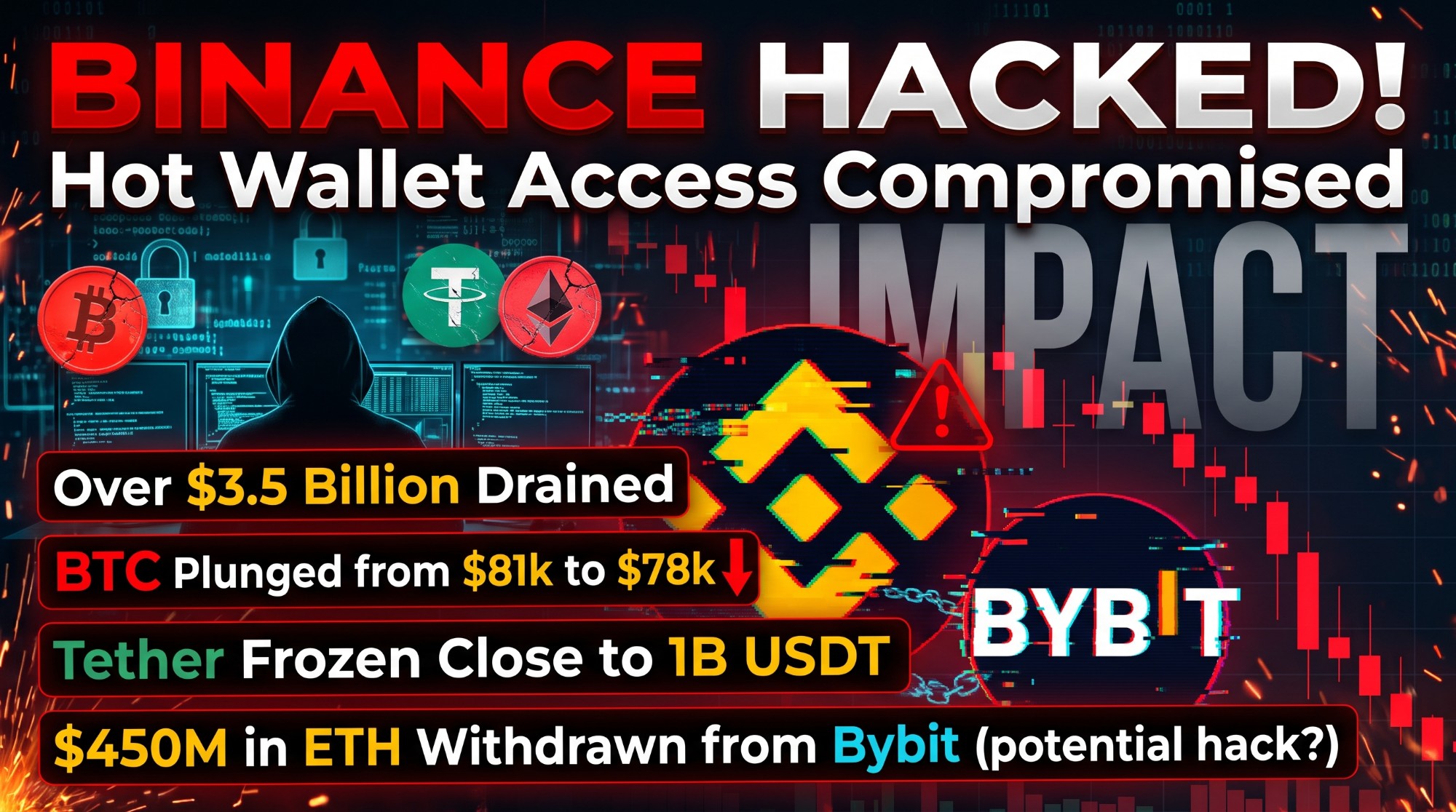
Short version: on October 29, 2026, somewhere between $2.5 billion and $3.5 billion in crypto moved out of a Binance hot wallet in a short window, across several blockchains. Tether froze about $971M USDT and Circle about $823M USDC on linked addresses. BNB fell as much as 9%. What is not established yet: whether this was actually a hack. Binance says it is investigating and has not confirmed any loss of user funds. Treat the “$3.5B hack” headline as a developing, unconfirmed story — because that’s what it is.
What actually happened
On-chain watchers flagged a very large transfer out of the wallet cluster commonly labeled “Binance 14” to a freshly created address, then onward across roughly six chains. The dollar figure depends on who you ask and when they looked:
- Early reports: ~$2.5 billion moved in effectively one motion (PANews).
- Later monitoring: the running total grew toward ~$3.5 billion across multiple chains.
- Other outlets put it near $2.77 billion (Coindoo).
The figures disagree because this was reconstructed live from block explorers, not from a Binance disclosure. That alone should make you cautious about any single number — including the $3.5B in the thumbnail.
What’s confirmed vs. what isn’t
Confirmed / on the record:
- Stablecoin issuers moved fast. Tether froze ~$971M USDT and Circle reportedly froze ~$823M USDC on addresses tied to the outflow (Cryptobriefing). Issuers don’t freeze nine-figure sums for routine transfers — this is the strongest signal that something abnormal happened.
- The market reacted. BNB dropped up to ~9% on the day and hundreds of millions in positions were liquidated.
- The source wallet looks suspicious. On-chain researchers noted the initiating address was funded through Tornado Cash, a mixer — not how an exchange normally stages routine maintenance.
Not confirmed:
- That it’s a hack. Binance told Cointelegraph it is “investigating a potential security issue” and has not confirmed any impact on user funds. Reports attribute a “we were hacked, but funds are safe” line to CZ, but Binance has made no formal breach declaration. Exchanges also move funds between hot wallets for legitimate reasons, and researchers explicitly left that on the table.
- The “$450M from Bybit” claim. We could not verify a 2026 Bybit withdrawal of ~$450M in ETH. The well-documented Bybit incident is the February 2025 cold-wallet theft of ~$1.4B (The Block), attributed to the Lazarus Group — a different event, different size. Until a credible source confirms a fresh Bybit loss, treat that bullet as a rumor, not a fact.
Analysis — why the timing feels too convenient
This section is opinion and reasoning, clearly separated from the reporting above. None of it is confirmed.
Here’s the part that makes people uneasy, and it’s worth saying plainly. Bitcoin was already sitting at a level where a pullback looked overdue — the kind of frothy, over-leveraged setup where the market is “looking for an excuse” to flush longs. And then, right on cue, a multi-billion-dollar scare hits the single largest exchange, stablecoin issuers freeze over $1.7 billion within hours, and leverage gets liquidated across the board.
Is that proof of a coordinated, pre-planned “global operation”? No — and anyone selling you that certainty is guessing. But the coincidence is fair to notice:
- Fear events and technical corrections amplify each other. A market primed to correct doesn’t need a conspiracy; it needs a trigger. A credible “Binance hacked” headline is a perfect trigger whether or not the underlying breach is real.
- Narratives move faster than facts. The clickbait “$3.5B STOLEN” framing spreads in minutes; the sober “unconfirmed, figures vary, Binance investigating” correction takes hours or days. By then the liquidation has already happened.
- Who benefits? In any violent flush, someone on the other side of forced sellers does well. That’s not evidence of a plot — it’s just how leverage works. But it’s exactly why “suspiciously good timing” stories are so sticky.
The honest conclusion: this is a real, serious, still-developing event — big outflows, real stablecoin freezes, a real price reaction — wrapped in a lot of unverified detail and arriving at a moment the market was fragile anyway. Stay skeptical of both the “nothing happened” and the “it’s all staged” extremes until Binance and independent on-chain analysts publish a settled account.
What this means for you
If your funds are on an exchange, this is the periodic reminder that an exchange balance is an IOU, not self-custody. Beyond the usual (withdraw what you don’t actively trade, use a hardware wallet, enable every security control): if you run AI agents or MCP tools that touch exchange APIs or wallets, the same lesson applies — a tool you trusted at install time can change underneath you. That drift is exactly what PALANIT watches for. You can scan a server, a config, a skill or a live MCP endpoint for free at palanit.com/verify, and check any website’s security posture at palanit.com/security-check.
We’ll update this page as Binance and independent analysts confirm or walk back the details.
Sources
- Cointelegraph — Binance wallet activity raises hack questions
- Cryptobriefing — Tether freezes ~$971M USDT linked to suspected Binance hack
- PANews — Binance hot wallet reportedly attacked, ~$2.5B transferred
- Coindoo — Binance hack fears: ~$2.8B outflows reported
- The Block — the (2025) Bybit ETH hack, for context